Goals-
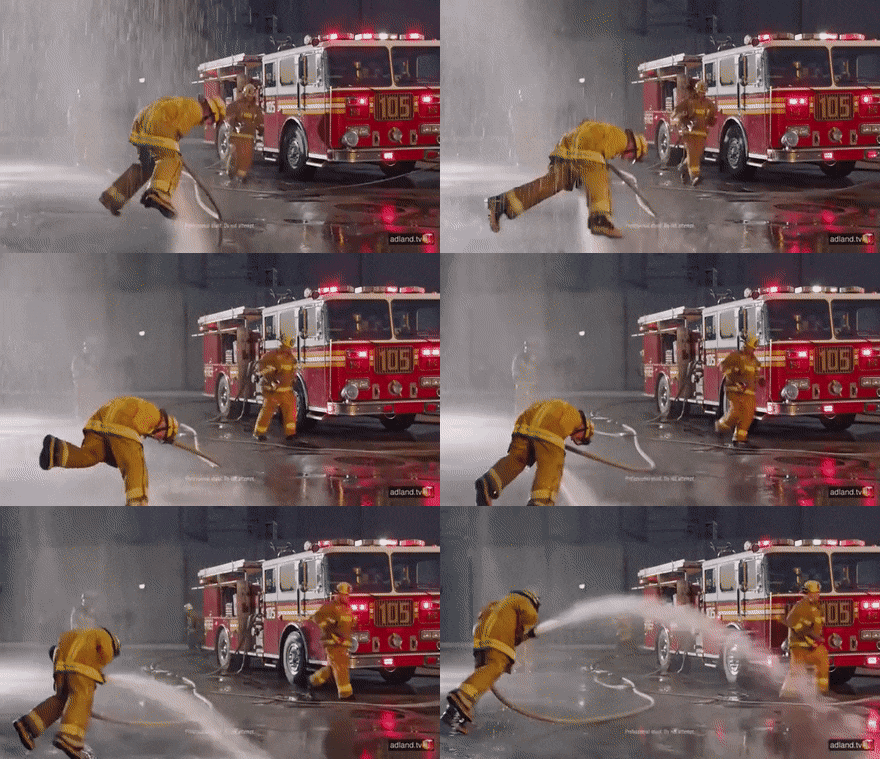
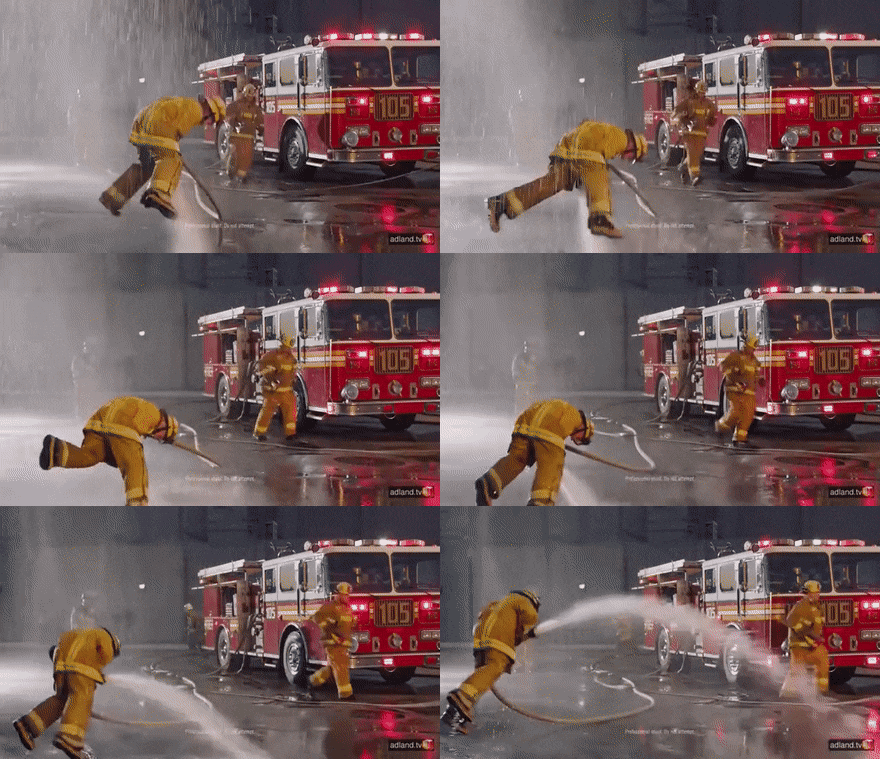
The goals of firefighting are (in order of priority): As such, the skills required for safe operations are regularly practiced during training evaluations throughout a firefighter's career. In the United States, the preeminent fire training and standards organization is the National Fire Protection Association (NFPA). Often initial firefighting skills are taught during a local, regional, or state approved fire academy. Depending on the requirements of a department, additional skills and certifications such as technical rescue and Para-medicine may also be taught at this time. The acronym for the priorities of the firefighters is RECEO.
Firefighters work closely with other emergency response agencies, most particularly local and state police departments. As every fire scene is technically a crime scene until deemed otherwise by a qualified investigator, there is often overlap between the responsibilities of responding firefighters and police officers such as evidence and scene protection, initial observations of first respondents, and chain of evidence issues. The increasing role of firefighters in providing emergency medical services also brings firefighters into common overlap with law enforcement. One example of this is a common state law requiring all gunshot wounds to be reported to law enforcement agencies.
Fire fighting has some basic skills: prevention, self-preservation, rescue, preservation of property, basic first aid, and fire control. Firefighting is further broken down into skills which include size-up, extinguishing, ventilation, salvage and overhaul. Wildland firefighting includes size up, containment, extinguishment, and mop up. Search and Rescue, which has already been mentioned, is performed early in any fire scenario and many times is in unison with extinguishing and ventilation.
Prevention-
Prevention attempts to ensure that no place simultaneously has sufficient heat, fuel and air to allow ignition and combustion. Most prevention programs are directed at controlling the energy of activation (heat). Fire suppression systems have a proven record for controlling and extinguishing unwanted fires. Many fire officials recommend that every building, including residences, have fire sprinkler systems. Correctly working sprinklers in a residence greatly reduce the risk of death from a fire. With the small rooms typical of a residence, one or two sprinklers can cover most rooms.
In addition, a major duty of fire services is the regular inspection of buildings to ensure they are up to the current building fire codes, which are enforced so that a building can sufficiently resist fire spread, potential hazards are located, and to ensure that occupants can be safely evacuated, commensurate with the risks involved.
Other methods of fire prevention are by directing efforts to reduce known hazardous conditions or by preventing dangerous acts before tragedy strikes. This is normally accomplished in many innovative ways such as conducting presentations, distributing safety brochures, providing news articles, writing public safety announcements (PSA) or establishing meaningful displays in well-visited areas. Ensuring that each household has working smoke alarms, is educated in the proper techniques of fire safety, has an evacuation route and rendezvous point is of top priority in public education for most fire prevention teams in almost all fire department localities.
Self-preservation-
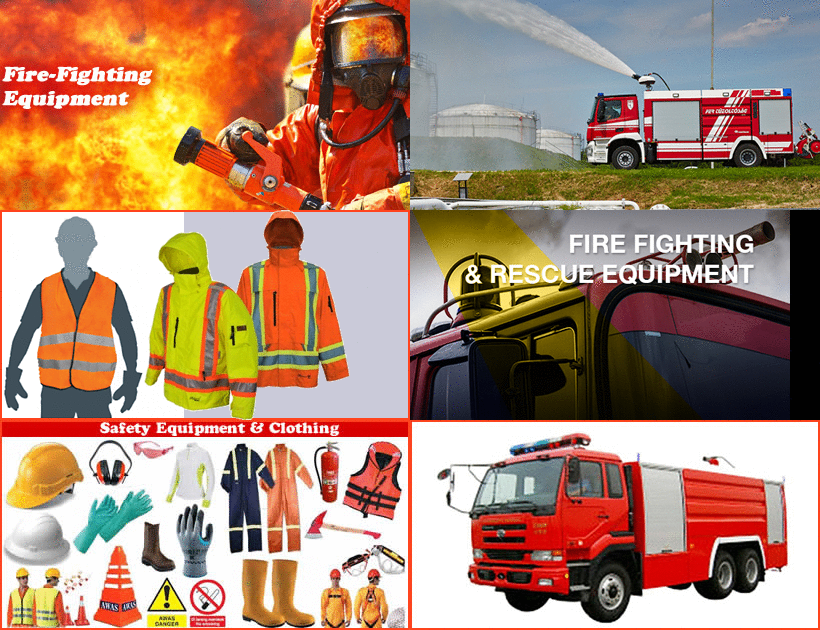
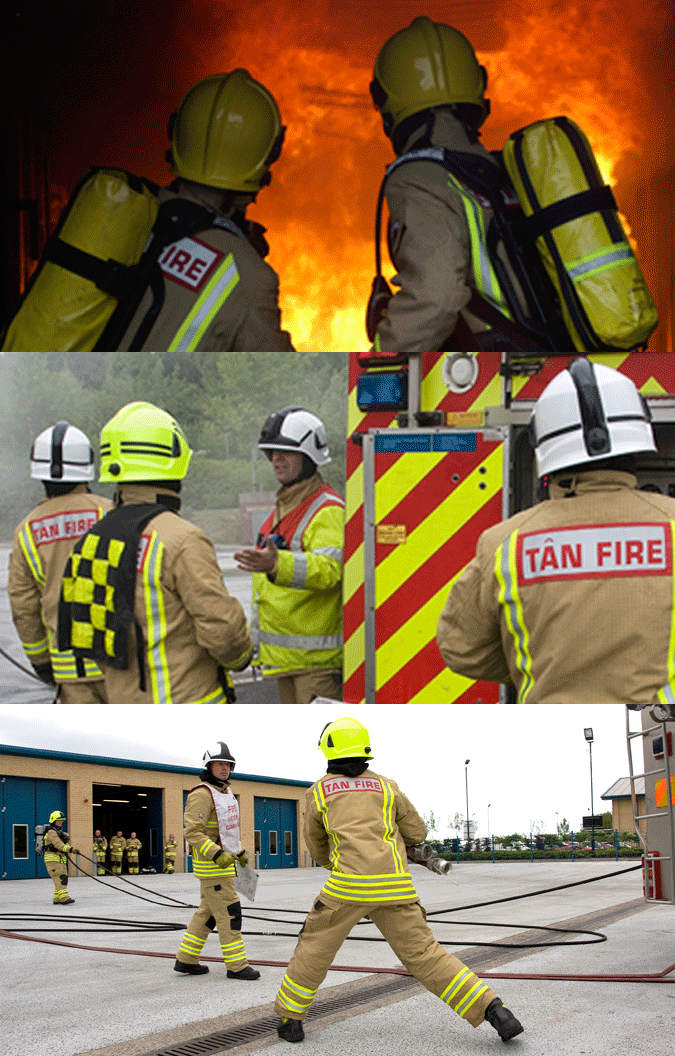
Tools are generally carried at all times and are important for not only forcible entry but also for self rescue. A self-contained breathing apparatus (SCBA) delivers air to the firefighter through a full face mask and is worn to protect against smoke inhalation, toxic fumes, and super heated gases. A special device called a Personal Alert Safety System (PASS) is commonly worn independently or as a part of the SCBA to alert others when a firefighter stops moving for a specified period of time or manually operates the device. The PASS device sounds an alarm that can assist another firefighter (Firefighter Assist and Search Team (FAST), or Rapid Intervention Team (RIT)), in locating the firefighter in distress.
Firefighters often carry personal self rescue ropes. The ropes are generally 30 feet long and can provide a firefighter (that has enough time to deploy the rope) a partially controlled exit out of an elevated window. Lack of a personal rescue rope is cited in the deaths of two New York City Firefighters, Lt. John Bellew and Lt. Curtis Meyran, who died after they jumped from a fourth floor of a burning apartment building in the Bronx. Of the four firefighters who jumped and survived only one of them had a self rescue rope. Since the incident the Fire Department of New York City has issued self rescue ropes to their firefighters.
In the United States, 25% of fatalities to firefighters are caused by vehicle accidents while responding to or returning from an incident. Many firefighters are also injured or killed by vehicles while working at an incident (Paulison 2005). Recently (November 24, 2008) a new measure was established by many departments that requires firefighters to wear a bright yellow reflective vest over their turnout coats while working on the scene of vehicle accidents. The advent of this measure was implemented so firefighters are more visible to the other drivers on the road. In addition to the direct dangers of firefighting, cardiovascular diseases account for approximately 45% of on duty firefighter deaths.
Rescue-
Rescue operations consist of searching for and removing trapped occupants of hazardous conditions. Animals may also be rescued, if resources and conditions permit. Generally triage and first aid are performed outside, as removal from the hazardous atmosphere is the primary goal in preserving life. Search patterns include movement against room walls (to prevent rescuers from becoming lost or disoriented) and methodical searches of specific areas by designated teams. Unlike a fire control team, a rescue team typically moves faster, but has no hose to follow out to safety through the smoky darkness. A rescue rope may be needed for tethering a team involved in exceptionally dangerous conditions.
Incident commanders also arrange for standby search and rescue teams to assist if firefighters become lost, trapped, or injured. Such teams are commonly, and often interchangeably, known as Rapid Intervention Team (RIT), or Firefighter Assist and Search Teams (FAST). According to "two-in, two-out", the only time it is permissible for a team of firefighters to enter a burning structure without backup in place outside is when they are operating in what is known as "Rescue Mode". Rescue Mode occurs when firefighters have arrived at the scene, and it is readily apparent that there are occupants trapped inside who need immediate rescue. At such a time, properly equipped firefighters (exercising good judgment tempered by training and experience) may enter the structure and proceed directly to victims in need of rescue, RIT will then be put in place when resources permit.
The Worcester Cold Storage Warehouse fire provides a stark example of disoriented rescuers perishing when their air supply was exhausted during a fruitless primary search and subsequent RIT searches.
Searches for trapped victims are exhaustively detailed, often including searches of cupboards, closets, and under beds. The search is divided into two stages, the primary and secondary. The primary search is conducted quickly and thoroughly, typically beginning in the area closest to the fire as it is subjected to the highest risk of exposure. The secondary search only begins once the fire is under control, and is always (resources and personnel permitting) performed by a different team from that which did the primary search.
Rescue operations may also involve the extrication of victims of motor vehicle crashes (abbreviated MVC). Here firefighters use spreaders, cutters, and hydraulic rams, collectively called hydraulic rescue tools, known better to the public as Jaws of Life, to remove metal from the patient, followed by actually removing the patient, usually on a backboard with collar, and transferring to a waiting ambulance crew in the cold zone. More technical forms of rescue include subsets such as rope rescue, swiftwater rescue, confined space rescue, and trench rescue. These types of rescue are often extremely hazardous and physically demanding. They also require extensive technical training. NFPA regulation 1006 and 1670 state that a "rescuer" must have medical training to perform any technical rescue operation. Accordingly, firefighters involved in rescue operations have some kind of medical training as first responders, emergency medical technicians, paramedics or nurses.
Fire control-
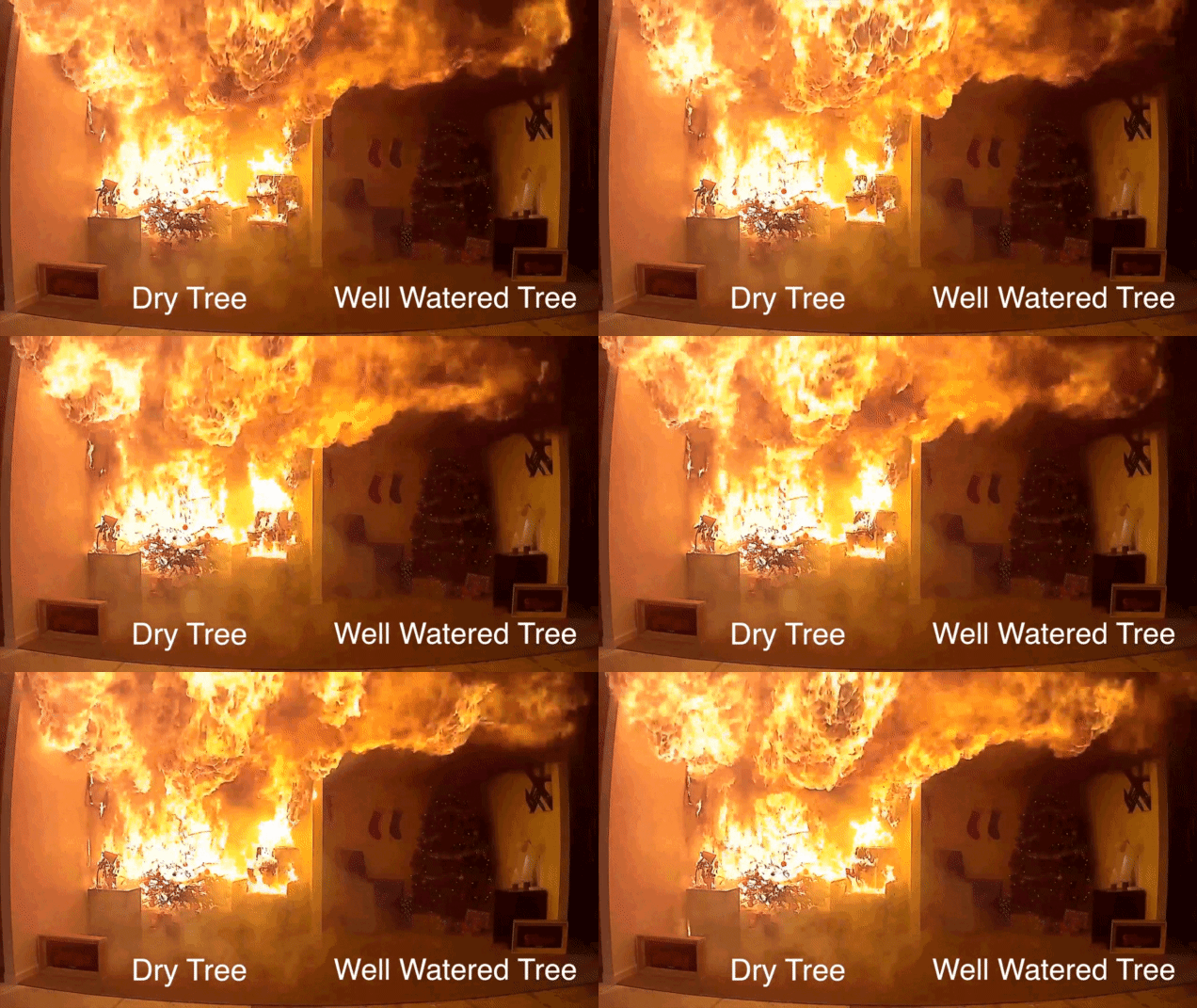
Fire control (or fire fighting) consists of depriving a fire of fuel (Reducing Agent), oxygen (Oxidizing Agent), heat and/or the chemical chain reaction that are necessary to sustain itself or re-kindle (also known as the four components of the fire tetrahedron). Firefighters are equipped with a wide variety of equipment to accomplish this task. Some of their tools include ladder trucks, pumper trucks, tanker trucks, fire hose, and fire extinguishers. Very frequent training and refresher training is required.
Structure fires may be attacked, generally, either by "interior" or "exterior" resources, or both. Interior crews, using the "two-in, two out" rule, may advance hose lines inside the building, find the fire and cool it with water. Exterior crews may direct water into windows or other openings, or against other nearby fuels exposed to the initial fire. Hose streams directed into the interior through exterior wall aperturtes may conflict with and jeopardize interior fire attack crews. A proper command structure will plan and coordinate the various teams and equipment to safely execute each tactic.
Structure fires-
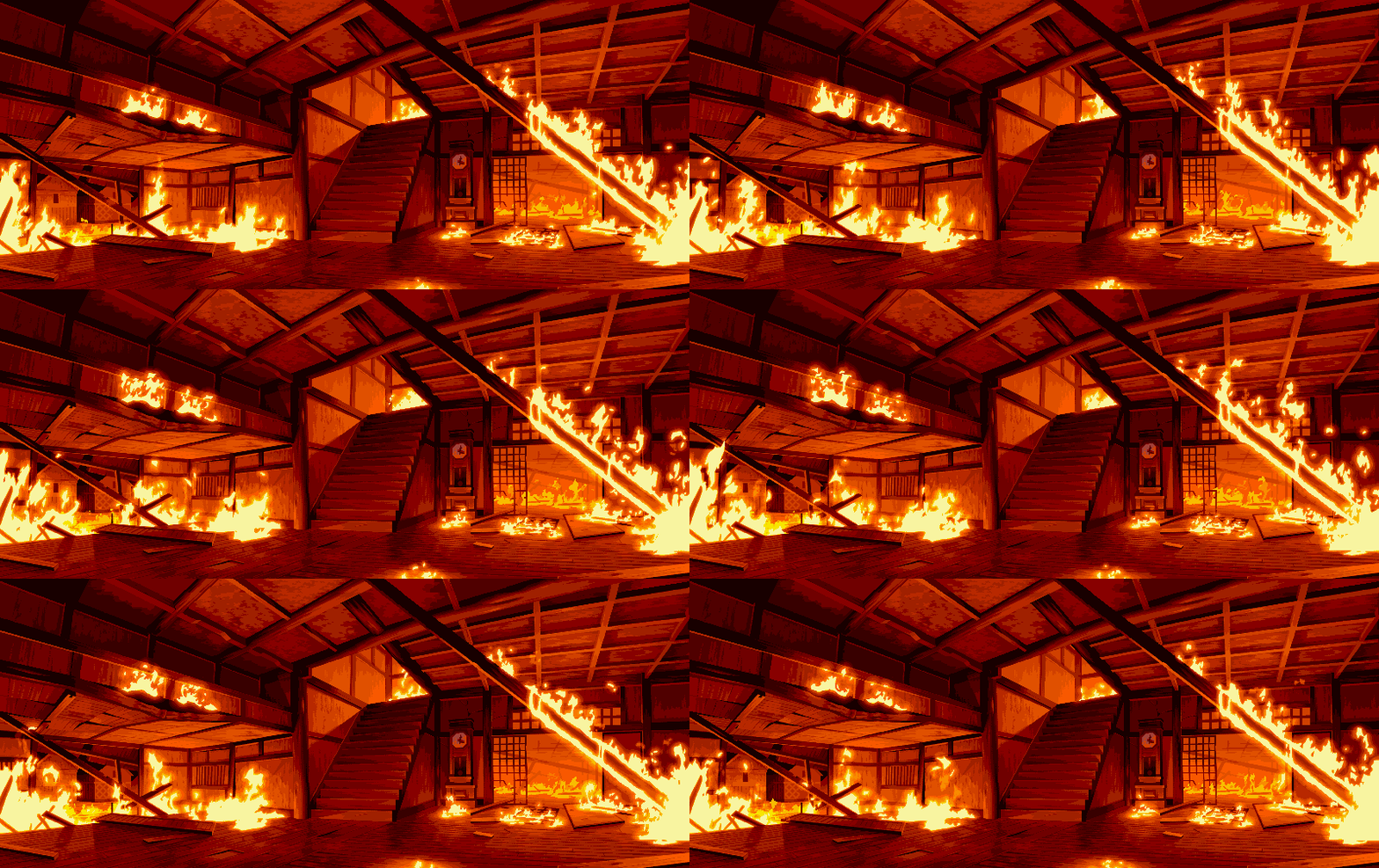
Buildings that are made of flammable materials such as wood are different from so called "fire-resistant" buildings such as concrete high-rises. Generally, a "fire-resistant" building is designed to limit fire to a small area or floor. Other floors can be safe simply by preventing smoke inhalation and damage. All buildings suspected of being on fire must be evacuated, regardless of fire rating.
While sometimes fires can be limited to small areas of a structure, wider collateral damage due to smoke, water, and burning embers is common. Utility shutoff (such as gas and electricity) is typically an early priority of arriving fire crews. Furthermore, fire prevention can take on a special meaning for property where hazardous materials are being used or stored.
Some fire fighting tactics may appear to be destructive, but often serve specific needs. For example, during "ventilation" firefighters are often forced to open holes in the roof or floors of a structure (called "vertical ventilation") or open windows or walls (called "horizontal ventilation") to remove smoke and heated gases from the interior of the structure. Such ventilation methods are also used to improve interior visibility facilitating locating victims more quickly. This also helps to preserve the life of trapped or unconscious individuals as it vents the poisonous gases from inside of the structure. Vertical ventilation is absolutely vital to firefighter safety in the event of a flashover or backdraft scenario. Releasing the flammable gasses through the roof often eliminates the possibility of a backdraft and by the removal of heat the possibility of a flashover is reduced significantly. Flashovers, due to their intense heat (900–1200° Fahrenheit) and explosive temperaments are almost always fatal to firefighter personnel. Precautionary methods, such as busting a window out, often reveal backdraft situations before the firefighter enters the structure and is met with the circumstance head-on. Firefighter safety is the number one priority.
Whenever possible, movable property is moved into the middle of a room and covered with a heavy cloth tarp (a "salvage cover"). Other steps may be taken to divert or remove fire flow runoff (thus salvaging property by avoiding unnecessary damage), retrieving/protecting valuables found during suppression or overhaul, and boarding windows, roofs.
Firefighters in the United States are frequently the first responders to HAZMAT incidents. The Occupational Safety and Health Administration standard 1910.120 defines four standards of training First responder awareness level, First responder operations level, Hazardous materials technician, and Hazardous materials specialist. EMS-based paramedics are typically trained to the awareness level, whereas career and volunteer firefighters are often trained to the operations level or better. Other nations have trained only elite firefighters and rescuers to do HAZMAT so that funding and equipment could go to fewer stations. This gives departments elite HAZMAT personnel and high-grade equipment for an incident. Departments place these companies in stations where they can be very mobile.
Firefighting has long been associated with poor cardiovascular outcomes. In the United States, the most common cause of on-duty fatalities for firefighters is sudden cardiac death. In addition to personal factors that may predispose an individual to coronary artery disease or other cardiovascular diseases, occupational exposures can significantly increase a firefighter's risk. For instance, carbon monoxide, present in nearly all fire environments, and hydrogen cyanide, formed during the combustion of paper, cotton, plastics, and other substances containing carbon and nitrogen, interfere with the transport of oxygen in the body. Hypoxia can then lead to heart injury. In addition, chronic exposure to particulate matter in smoke is associated with atherosclerosis. Noise exposures may contribute to hypertension and possibly ischemic heart disease. Other factors associated with firefighting, such as stress, heat stress, and heavy physical exertion, also increase the risk of cardiovascular events.
Heat stress-
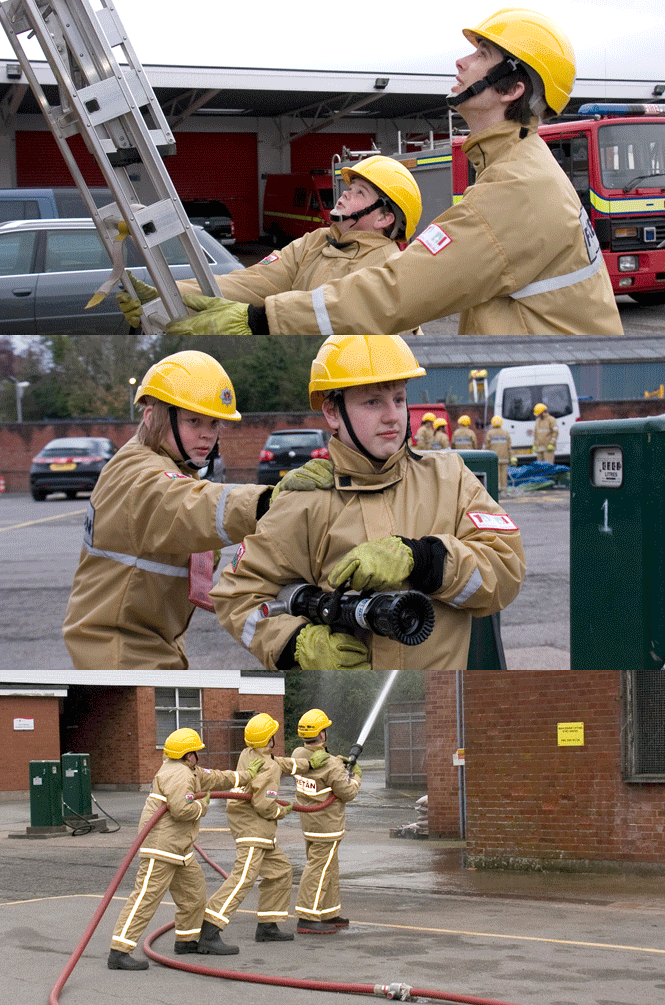
Heat injury is a major issue for firefighters as they wear insulated clothing and can not shed the heat generated from physical exertion. Early detection of heat issues is critical to stop dehydration and heat stress becoming fatal. Early onset of heat stress affects cognitive function which combined with operating in dangerous environment makes heat stress and dehydration a critical issue to monitor. Firefighter physiological status monitoring is showing promise in alerting EMS and commanders to the status of their people on the fire ground. Devices such as PASS device alert 10–20 seconds after a firefighter has stopped moving in a structure. Physiological status monitors measure a firefighter's vital sign status, fatigue and exertion levels and transmit this information over their voice radio. This technology allows a degree of early warning to physiological stress. These devices are similar to technology developed for Future Force Warrior and give a measure of exertion and fatigue. They also tell the people outside a building when they have stopped moving or fallen. This allows a Fire Chief to call in additional engines before the crew get exhausted and also gives an early warning to firemen before they run out of air, as they may not be able to make voice calls over their radio. Current OSHA tables exist for heat injury and the allowable amount of work in a given environment based on temperature, humidity and solar loading.
Another leading cause of death during firefighting is structural collapse of a burning building (e.g. a wall, floor, ceiling, roof, or truss system). Structural collapse, which often occurs without warning, may crush or trap firefighters inside the structure. To avoid loss of life, all on-duty firefighters should maintain two-way communication with the incident commander and be equipped with a Personal Alert Safety System device on all fire scenes and maintain radio communication on all incidents(PASS). Francis Brannigan was the founder and greatest contributor to this element of firefighter safety.
Firefighting Around the World-
In Germany, even the smallest villages are required to have a volunteer fire department, called the "Freiwillige Feuerwehr", by law. Even the biggest German city, Berlin, with more than 3.6 million inhabitants, has volunteer firefighters in addition to a regular professional fire service. However, due to urbanization and a shrinking population, very small villages may be exempt from this requirement if the area can be covered by the fire department from a neighboring town. If this is not the case, a compulsory fire department is established by conscripting every able-bodied inhabitant between 18 and 63 years of age. A career fire service is mandatory for towns with more than 100,000 inhabitants. Consequently, only 103 German cities have a career fire service, called the "Berufsfeuerwehr", but in all of these cities a volunteer fire service exists too. In cities with a career fire service, volunteer fire brigades support the career fire service in the case of several emergencies at once, bigger fires, accidents and disasters. In a few of the bigger towns (usually more than 35,000 inhabitants) a large volunteer fire department could consist of a core of career firefighters supported by true volunteer firefighters. However, the official title of those departments is nevertheless "volunteer fire service".
The structure in Austria is similar to Germany. There are just six career fire services in Vienna, Graz, Innsbruck, Klagenfurt, Salzburg and Linz. As of 2007, some 4,527 volunteer fire departments, the back-bone of the Austrian fire service, could rely on about 320,000 men and women voluntary firefighters as active members. Fire departments exist in even the smallest villages, where they contribute to community life, usually by organizing fairs and other fund-raising activities.
In Venezuela, there are, beside the types mentioned above, University Firefighters. They attend any emergency inside the campus and the zones around; however, their most important job is to develop new technologies in this area, thanks to the high level of education of its members: in the Simón Bolívar University Volunteer Fire Department, around 80% of its members have a university degree or are in the process of obtaining one.
In Japan, fire services are organized on a city/town/village basis. There are 894 fire headquarters and 3,598 volunteer fire corps. These have a total of 155,000 active career firefighters and 21,000 vehicles with 4,800 fire houses; 920,000 volunteer firefighters share an additional 51,000 trucks.
In Romania, the Romanian General Inspectorate for Emergency Situations is responsible for fire fighting and civil defense.
In Singapore, the Singapore Civil Defence Force is responsible for fire fighting and emergency response. In addition to career firefighters, there are conscripted firefighters, generally young adults between the ages of 18-25, that join under the national service scheme. In India municipalities are required by law to have a fire brigade and participate in a regional fire service. Each city has its own fire brigade. The main functions of firefighting services in India are provision of fire protection and of services during emergencies such as building collapses, drowning cases, gas leakage, oil spillage, road and rail accidents, bird and animal rescues, fallen trees, appropriate action during natural calamities, and so on. Industrial corporations also have their own firefighting service. Each airport and seaport has its own firefighting units.
The expedient and accurate handling of fire alarms or calls are significant factors in the successful outcome of any incident. Fire department communications play a critical role in that successful outcome. Fire department communications include the methods by which the public can notify the communications center of an emergency, the methods by which the center can notify the proper fire fighting forces, and the methods by which information is exchanged at the scene. One method is to use a megaphone to communicate.
A telecommunicator (often referred to as a dispatcher) has a role different but just as important as other emergency personnel. The telecommunicator must process calls from unknown and unseen individuals, usually calling under stressful conditions. He/she must be able to obtain complete, reliable information from the caller and prioritize requests for assistance. It is the dispatcher's responsibility to bring order to chaos.
While some fire departments are large enough to utilize their own telecommunication dispatcher, most rural and small areas rely on a central dispatcher to provide handling of fire, rescue and police services.
Firefighters are trained to use communications equipment to receive alarms, give and receive commands, request assistance, and report on conditions. Since firefighters from different agencies routinely provide mutual aid to each other, and routinely operate at incidents where other emergency services are present, it is essential to have structures in place to establish a unified chain of command, and share information between agencies. The U.S. Federal Emergency Management Agency has established a National Incident Management System. One component of this system is the Incident Command System.
All radio communication in the United States is under authorization from the Federal Communications Commission (FCC); as such, fire departments that operate radio equipment must have radio licenses from the FCC.